1. Identify the key developments in accounting over the past two decades and analyze the primary factors driving these advancements in the context of contemporary business and technological trends.
2. Define depreciation and explain how it differs from amortization. Provide a detailed discussion of the various methods used for calculating depreciation in modern accounting practices.
3. Define the concept of cost and elaborate on its key elements. Differentiate between direct costs and variable costs, providing relevant examples to illustrate the distinction.
4. What is financial risk? How does differ from business risk? How does the use of financial leverage result in increased financial risk?
5. Define the working capital management. Why is it important to study the management of working capital as a separate area in financial management?
1. Explain the following concepts and discuss their relevance in preparing Financial Statements:
(a) Business entity concept
(b) Money measurement concept
(c) Accrual concept
(d) Concept of conservatism
2. What is a Balance Sheet? Explain the classification of items depicted in a Balance Sheet? Supplement you answer with figures extracted from a Balance sheet of any listed company.
3. Delhi & New Delhi Company Ltd., manufactures and sells four types of products viz. A, B, C and D. The sales mix in value term comprises of
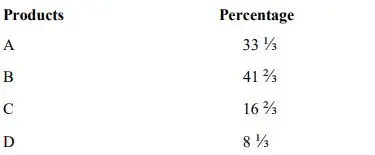
The total budgeted sales (100%) are Rs 6,00,000 per month. The operating costs for each product is :
60% of the Selling Price for product – A
68% of the Selling Price for product – B
80% of the Selling Price for product – C
40% of the Selling Price for product – D
The fixed costs are Rs. 1,59,000 per month.
(a) Calculate the Breakeven Point for the production on overall basis.
(b) If the sales mix is changed as follows and total sales per month remains at Rs. 6,00,000, calculate the new breakeven point.
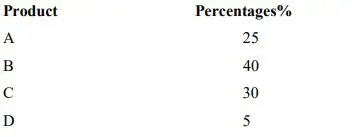
4. What do you understand by Leverage? Explain the concept of Financial and Operating Leverage. In what way is Financial Leverage related to Operating Leverage, discuss.
5. What is Capital Structure? Discuss the features of an appropriate Capital Structure and describe the determinants of Capital Structure.



 Help?
Help?