Same Day Delivery in Delhi 9350849407 T&C
M

IGNOU BCHCT-131 Atomic Structure, Bonding, General Organic Chemistry and Aliphatic Hydrocarbons - IGNOU Solved Assignment (Latest)

Sale!
1st Choice of IGNOU Students to Score High in IGNOU Exam
[ai_sample_generator]

BUY BCHCT-131 COMBO and Save upto 50%

BCHCL-132
BCHCT-131
BEVAE-181
BCHCL-132
BCHCT-131
BEVAE-181
Language : 
English
Semester : 
1st
Year : 
1st
451.00
960.00
Save 509.00
BCHCT-131
BCHCT-133
BCHCT-131
BCHCT-133
Language : 
English
Semester : 
1st
2nd
Year : 
1st
400.00
850.00
Save 450.00

PLEASE MATCH YOUR ASSIGNMENT QUESTIONS ACCORDING TO YOUR SESSION

IGNOU BCHCT-131 (January 2025 – December 2025) Assignment Questions
PART-(A) 
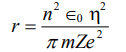
1. How is the following expression for radius of hydrogen atom arrived at?
2. (a) Briefly explain Heisenberg uncertainty principle.
(b) Name the phenomena which can be explained using
(i) wave nature of radiation
(ii) particle nature of radiation.
3. Arrive at the time independent Schrodinger equation for a particle.
4. Explain the transformation of Schrodinger equation from Cartesian to spherical polar coordinates and give its solution.
5. (a) Write the electronic configuration of the following:
Cl, Cr, Nb
(b) State aufbau principle.
6. First ionisation energies of second period elements show that the values increase from lithium to beryllium, decrease for boron, and increase up to nitrogen, again decrease in oxygen and finally increase up to neon. Explain.
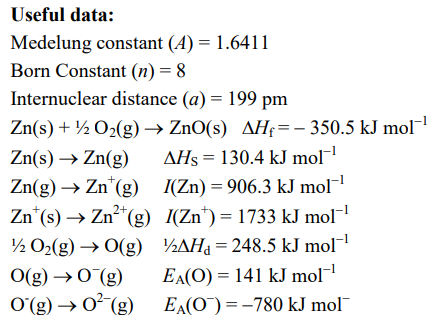
7. Calculate the lattice energy (in Units kJ mol1) for ZnO crystal using electrostatic model and using a Born-Haber cycle. Compare the two answers and comment on any difference.
8. a) i) Define formal charge. State the purpose of calculating formal charge of a molecule and write its assumptions.
ii) Calculate the formal charges of NH3 and NH4+.
b) Predict the molecular geometry of XeF4 and PCl5 molecules by using VSEPR theory.
9. Draw the resonance structures of HCl. Out of them which one has little importance as a resonance structure and why?
10. Write the molecular orbital configurations of  O2and- O2. Calculate their bond orders and comment on their magnetic nature.
PART-(B)
11. a) Write the chain isomers for a molecule having molecular formula C5H12.
b) Write the geometrical isomers of 1,2-dimethylcyclopropane. Which one of them will have a dipole moment and why?
12. Write the Fischer projections of stereoisomers of 2,3,4-trihydroxybutanal. Classify as them as erythrose or threose type. Also mark their configuration as D or L.
13. Draw and explain various confirmations of butane. Which one of them is least stable and which one is the most stable?
14. a) Write the resonance structures of ethanoate ion. Is the negative charge localised or not?
b) Illustrate hyper conjugation with a suitable example.
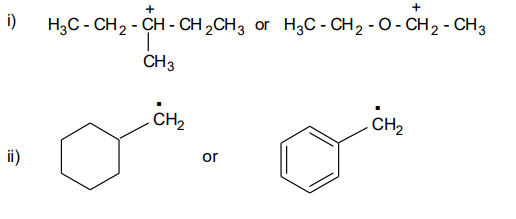
15. a) How does the stabilities of free radicals resemble those of carbocations? Explain with the help of suitable examples
b) Which out of the following pairs is more stable and why?
16. Briefly explain the following reactions and give their importance;
(i) Wurtz reaction
(ii) Sabatier-Senderen’s reaction
17. Explain the mechanism of Birch reduction giving a suitable example.
18. Write the mechanism of hydration of 1-butene.
19. Write the products formed when 2-pentyne undergoes ozonolysis. Give the mechanism involved.
20. Draw the molecular orbitals of benzene and illustrate its electronic configuration.

IGNOU BCHCT-131 (January 2024 – December 2024) Assignment Questions

PART-(A)

1. Using a suitable diagram explain the spectral transitions between different energy levels of hydrogen atom. Also name these series of lines and give the region of electromagnetic radiation in which they appear.

2. What was the purpose of Davisson and Germer experiment? Explains and analyse its results.

3. (a) What is a well-behaved wave function? Illustrate using suitable diagram.
(b) Give the significance of ψ and ψ2.

4. What are different quantum numbers? Explain their significance.

5. Briefly explain the following:

(i) The aufbau principle
(ii) Hund’s rule
(iii) Pauli exclusion principle

6. a) Arrange the following compounds in order of decreasing lattice energy: LiF,MgO,KBr. Justify your answer.
b) Predict coordination number of the cation in crystals of the following compounds.
MgO: if ionic radii for Mg2+ =65 pm and O2– = 140 pm.
MgS: if ionic radii for Mg2+ =65 pm and O2– = 184 pm.

7. Why does the bond length decrease in the case of multiple bond formation? Explain with the help of an example. Also explain why a multiple bond is stronger than a single bond.

8. a) The observed dipole moment of HI is 0.38 D. Calculate the percentage ionic character of the bonding HI if bond distance is 161 pm
b) Melting point of aluminum fluoride is higher than the melting point of aluminum iodide. Explain

9. Draw the resonance structures of carbon monoxide. Also give the electronic configuration of the combining atoms

10. Draw the energy level diagram for carbon monoxide molecule. Write its molecular orbitals configuration and calculate its bond order. Comment on its magnetic behaviour.

PART-(B)

11. Draw all the stereoisomers of 2-bromo-3-chlorobutane and classify them as enantiomers and diastereoisomers.

12. (a) What are resolving agents? Give examples of three acidic and three basic resolving agents.
(b) Write the Fischer projection for the molecule.

13. Draw and explain the energy propile for ring flipping of chair conformation of cyclohexane.

14. Arrange the following carbocations in the increasing order of stability and explain the reason for your answer:
A primary carbocation, a tertiary carbocation, a secondary carbocation.

15. Arrange the following nucleophiles in the increasing order of their strength and give reason for your answer.
CH3-, NH2-, CN-, OH-, I-

16. (a) Define octane number. How does the octane number of a hydrocarbon vary with the following?
(i) Branching of the hydrocarbon chain
(ii) Decrease in the chain length
(iii) Unsaturation
(b) How would you synthesise hexane using Wurtz reaction. Explain giving equation.

17. How would you prepare an alkene using Wittig reaction? Explain the mechanism also.

18. What is Markownikoff’s rule? Explain using this rule why 2-bromopropane is the major product of bromination of propene.

19. Discuss different methods of preparation of propyne.

20. Explain whether the following compounds are aromatic or not?
BCHCT-131 Assignments Details

University : IGNOU (Indira Gandhi National Open University)
Title :Atomic Structure, Bonding, General Organic Chemistry and Aliphatic Hydrocarbons
Language(s) : English
Code : BCHCT-131
Degree :
Subject : Chemistry
Course : Core Courses (CC)
Author : Gullybaba.com Panel
Publisher : Gullybaba Publishing House Pvt. Ltd.
Help
Back to Top $

My Cart

[last_viewed_products limit="4"]

AI Sample Paper

Loading...