


 Help?
Help?
PLEASE MATCH YOUR ASSIGNMENT QUESTIONS ACCORDING TO YOUR SESSION
IGNOU BCOC-134 (January 2026 – December 2026) Assignment Questions
Section – A
Q. 1 A firm producing packaged snacks operates in a competitive urban market. The estimated
monthly demand function for its product is
𝑄 = 1,200 − 20𝑃
where 𝑄is quantity demanded and 𝑃is price per packet (in ₹). The total cost function of the
firm is
𝐶 = 4,000 + 10𝑄 + 0.05𝑄2
a) Derive the total revenue and profit of the firm.
b) Using calculus, determine the level of output that maximizes profit.
c) Find the corresponding price and maximum profit.
d) Interpret the results for managerial decision-making.
Q. 2 The monthly sales (in ₹ lakh) of a regional retail chain across eight outlets are as follows:

a) Calculate the mean and median sales.
b) Compute the standard deviation.
c) Comment on the consistency of sales performance across outlets.
d) Suggest one managerial implication based on the dispersion observed.
Q. 3 A manufacturing firm plans to replace old machinery after five years. It deposits ₹5,00,000 today in a fixed-income instrument offering 9% per annum compounded annually.
a) Calculate the amount accumulated after five years.
b) If the firm alternatively considers a simple interest investment at 10% per annum for the same period, compute the maturity value.
c) Compare the two options and justify which is financially preferable.
d) Explain the relevance of compounding for long-term business planning
Q. 4 A marketing manager wants to study the relationship between advertising expenditure (₹ lakh) and sales revenue (₹ lakh) of a product. The following data are collected:

a) Estimate the regression equation of sales on advertising.
b) Interpret the slope of the regression line estimated above.
c) Estimate expected sales when advertising expenditure is ₹7 lakh.
d) Explain how this regression result can assist managerial decisions.
Q. 5 A firm produces three products using two raw materials. The input requirement (in units) per
unit of output is given below:

If the firm plans to produce 100 units of product 1, 80 units of product 2, and 60 units of product 3:
a) Express the production plan as a column matrix.
b) Determine the total requirement of each raw material using matrix multiplication.
c) Interpret the results for procurement planning.
d) State two advantages of using matrices in business analysis.
Section – B
Q. 6 Explain the role of statistics in modern business decision-making. Illustrate your answer with suitable examples from marketing, production, or finance departments in a firm.
Q. 7 A firm’s average cost function is given by

a) Find the output level at which average cost is minimum.
b) Explain the economic significance of this point for the firm.
Q. 8 A company employs workers in three departments with the following average monthly wages:

Calculate the overall average monthly wage of the company using the weighted average method and interpret the result.
Q. 9 The marginal revenue function of a firm is:
𝑀𝑅 = 100 − 4𝑄
a) Derive the total revenue function assuming revenue is zero when output is zero.
b) Determine the level of output at which total revenue is maximum.
c) State one managerial implication of your result.
Q.10 Define correlation. Using a suitable business example, explain the difference between positive correlation and negative correlation.
Section – C
Q.11 Write short notes on the following:
a) Contribution margin and its business relevance
b) Break-even analysis
Q.12 Distinguish between the following:
a) Simple index numbers and Weighted index numbers
b) Absolute Measure of Dispersion and Relative Measure of Dispersion
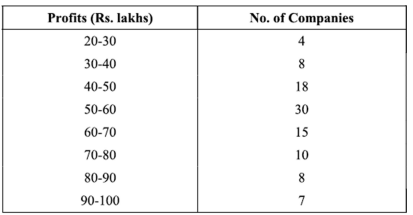
IGNOU BCOC-134 (January 2025 – December 2025) Assignment Questions
IGNOU BCOC-134 (January 2024 – December 2024) Assignment Questions
Section – A
Q.1 A dataset representing the monthly sales (in thousands of dollars) for a small business over the past 12 months: 20,22,18,25,21,23,19,24,20,22,26,21
Calculate the range, variance, and standard deviation for the given dataset of monthly sales. Interpret the results in the context of the business’s sales variability.
Q.2 Given the following national income model
Y = C + I
C=5+ 3/4Y
I= 10
Find Y and C.
Q.3 Discuss the various functions related to business and economics.
Q.4 What do you mean by maxima or minima of a function? State the meaning of absolute minimum of a function. Explain the steps for finding maxima and minima of a function.
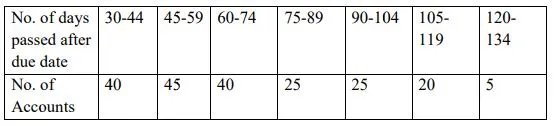
Q.5 The manager of a departmental store compiled information on 200 accounts receivable which were delinquent. For each account he has noted the number of days passed after the due date. He then grouped the data as shown in the following frequency distribution. Determine the median using two methods.
Section – B
Q.6 A manufacturer earns Rs. 5500 in the first month and Rs. 7000 in the second month. On plotting these points, the manufacturer observes a linear function may fit the data.
i. Find the quadratic function that fits the data.
ii. Using the model make a prediction of the earning for the fourth week.
Q.7 You are given the profit function of a business activity and asked to offer your suggestion on the rate of change of profit. What would you do?
Q.8 Bank pays compound interest at the rate of 5% p.a. XYZ deposited a principal amount of RS. 5,000 in bank for 4 years. Find the interest that XYZ will receive.
Q.9 Explain the difference between Karl Pearson’s correlation co-efficient and spearsman’s rank correlations co-efficient. Under what situations, in the latter preferred to the former?
Q.10 Explain briefly the additive and multiplicative models of time series. Which of these models is more commonly used and why?
Section – C
Q.11 Write short notes on the following:
(a) Factorization
(b) Harmonic Mean
Q.12 Differentiate between the following:
(a) Descriptive and Inferential statistics
(b) Absolute measures and relative measures of dispersion
IGNOU BCOC-134 (January 2026 – December 2026) Assignment Questions
सभी प्रश्नों के उत्तर दीजिए।
खण्ड – क
1. पैकेज्ड स्नैक्स का उत्पादन करने वाली एक फर्म एक प्रतिस्पर्धात्मक शहरी बाजार में कार्यरत है। इसके उत्पाद के लिए अनुमानित मासिक माँग फलन इस प्रकार है-
𝑄 = 1,200 − 20𝑃
जहाँ माँगी गई मात्रा है तथा Pप्रति पैकेट मूल्य (₹ में) है। फर्म का कुल लागत फलन इस प्रकार है-
𝐶 = 4,000 + 10𝑄 + 0.05𝑄2
(a) फर्म की कुल राजस्व तथा लाभ फलनों को व्युत्पन्न कीजिए।
(b) कलन (Calculus) का प्रयोग करते हुए उस उत्पादन स्तर का निर्धारण कीजिए जो लाभ को अधिकतम करता है।
(c) संबंधित मूल्य तथा अधिकतम लाभ ज्ञात कीजिए।
(d) प्रबंधकीय निर्णय-निर्माण के लिए परिणामों की व्याख्या कीजिए।
2. आठ आउटलेट्स में फैली एक क्षेत्रीय खुदरा श्रृंखला की मासिक विक्रय (लाख में) निम्नलिखित है:

(क) औसत (Mean) तथा माध्यिका (Median) की गणना कीजिए।
(ख) मानक विचलन (Standard Deviation) की गणना कीजिए।
(ग) आउटलेट्स में विक्रय प्रदर्शन की स्थिरता पर टिप्पणी कीजिए।
(घ) प्रेक्षित प्रसरण के आधार पर एक प्रबंधकीय निहितार्थ सुझाइए।
3. एक विनिर्माण फर्म पाँच वर्षों के बाद प्रानी मशीनरी को बदलने की योजना बनाती है। वह आज ₹5,00,000 एक निश्चित-आय साधन में जमा करती है जो वार्षिक चक्रवृद्धि सहित 9% प्रतिवर्ष ब्याज प्रदान करता है।
(क) पाँच वर्षों के बाद संचित राशि की गणना कीजिए।
(ख) यदि फर्म वैकल्पिक रूप से समान अवधि के लिए 10% प्रतिवर्ष साधारण ब्याज वाले निवेश पर विचार करती है, तो परिपक्वता मूल्य की गणना कीजिए।
(ग) दोनों विकल्पों की तुलना कीजिए तथा बताइए कि वित्तीय दृष्टि से कौन-सा विकल्प अधिक उपयुक्त है।
(घ) दीर्घकालिक व्यावसायिक योजना में चक्रवृद्धि (Compounding) की प्रासंगिकता की व्याख्या कीजिए।
4. एक विपणन प्रबंधक विज्ञापन व्यय (लाख) और किसी उत्पाद की विक्रय आय (लाख) के बीच संबंध का अध्ययन करना चाहता है। निम्नलिखित आँकड़े एकत्र किए गए हैं:

(क) विज्ञापन पर विक्रय का प्रतिगमन समीकरण (Regression Equation) का अनुमान लगाइए।
(ख) प्रतिगमन रेखा की ढाल (Slope) की व्याख्या कीजिए।
(ग) जब विज्ञापन व्यय ₹7 लाख हो, तब अपेक्षित विक्रय का अनुमान लगाइए।
(घ) यह प्रतिगमन परिणाम प्रबंधकीय निर्णयों में किस प्रकार सहायक हो सकता है, स्पष्ट कीजिए।
5. एक फर्म दो कच्चे माल का उपयोग करते हुए तीन उत्पादों का उत्पादन करती है। प्रति इकाई उत्पादन हेतु कच्चे माल की आवश्यकता (इकाइयों में) नीचे दी गई है-
यदि फर्म उत्पाद 1 के 100 इकाई, उत्पाद 2 के 80 इकाई तथा उत्पाद 3 के 60 इकाई उत्पादन की योजना बनाती है:
(क) उत्पादन योजना को स्तम्भ आव्यूह (Column Matrix) के रूप में व्यक्त कीजिए।
(ख) आव्यूह गुणन (Matrix Multiplication) का प्रयोग करते हुए प्रत्येक कच्चे माल की कुल आवश्यकता निर्धारित कीजिए।
(ग) क्रय (Procurement) योजना के लिए परिणामों की व्याख्या कीजिए।
(घ) व्यवसाय विश्लेषण में आव्यूहों (Matrices) के उपयोग के दो लाभ बताइए।
खण्ड – ख
6. आधुनिक व्यावसायिक निर्णय-निर्माण में सांख्यिकी की भूमिका की व्याख्या कीजिए। फर्म के विपणन, उत्पादन अथवा वित्त विभागों से उपयुक्त उदाहरणों द्वारा अपने उत्तर को स्पष्ट कीजिए।
7. किसी फर्म का औसत लागत फलन इस प्रकार दिया गया है-
(क) उस उत्पादन स्तर का निर्धारण कीजिए जिस पर औसत लागत न्यूनतम होती है।
(ख) फर्म के लिए इस बिंदु के आर्थिक महत्व की व्याख्या कीजिए।
8. एक कंपनी तीन विभागों में कर्मचारियों को नियुक्त करती है, जिनकी औसत मासिक मजदूरी निम्नलिखित है:

भारित औसत विधि (Weighted Average Method) का प्रयोग करते हुए कंपनी की समग्र औसत मासिक मजदूरी की गणना कीजिए तथा परिणाम की व्याख्या कीजिए।
9. किसी फर्म का सीमांत राजस्व फलन (Marginal Revenue Function) इस प्रकार है
𝑀𝑅 = 100 − 4𝑄
(क) यह मानते हुए कि उत्पादन शून्य होने पर राजस्व भी शून्य है, कुल राजस्व फलन व्युत्पन्न कीजिए।
(ख) उस उत्पादन स्तर का निर्धारण कीजिए जिस पर कुल राजस्व अधिकतम होता है।
(ग) अपने परिणाम का एक प्रबंधकीय निहितार्थ बताइए।
10. सहसंबंध (Correlation) की परिभाषा दीजिए। उपयुक्त व्यावसायिक उदाहरण का प्रयोग करते हुए धनात्मक सहसंबंध
तथा ऋणात्मक सहसंबंध के बीच अंतर स्पष्ट कीजिए।
खण्ड – ग
11. निम्नलिखित पर संक्षिप्त टिप्पणी लिखिए:
(क) योगदान मार्जिन (Contribution Margin) तथा उसका व्यावसायिक महत्व
(ख) ब्रेक-ईवन विश्लेषण (Break-even Analysis)
12. निम्नलिखित के बीच अंतर करें :
(क) सरल सूचकांक संख्याएँ (Simple index numbers) तथा भारित सूचकांक संख्याएँ (Weighted index numbers)
(ख) फैलाव का पूर्ण माप (Absolute Measure of Dispersion) तथा फैलाव का सापेक्ष माप (Relative Measure of Dispersion)
IGNOU BCOC-134 (January 2025 – December 2025) Assignment Questions