IGNOU BCHET-147 (January 2026 – December 2026) Assignment Questions
PART A: ORGANOMETALLICS, BIOINORGANIC CHEMISTRY
1. What is the chromyl chloride test? Give suitable equations.
2. Give the structure of dimethyl beryllium


5. How can formation of nitrosyl complexes be formed from carbonyl complexes with the help of nitric oxide? Give three suitable equations to show this.


8. Which metal ion is essential for the process of blood coagulation? Explain the mechanism by which it facilitates clot formation? Give the different ways by which cadmium affects the human body.
9. With the help of a suitable diagram explain the Na+ -K+ pump. Show how the sodium-potassium pump moves toward an equilibrium state with the relative concentrations.
10. With the help of a suitable diagram, explain the mechanism of oxygen binding in hemoglobin and discuss the structural changes that occur upon formation of oxyhemoglobin.
PART B: POLYNUCLEAR HYDROCARBONS AND UV, IR SPECTROSCOPY
11. How will you prepare 5-hexen-2-one from ethyl 3-oxobutanoate. Give the reactions involved and the reagents used in the reaction.
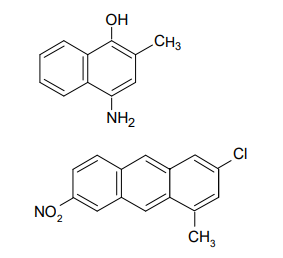
12. (a) Give IUPAC names of the following compounds.

(b) Is napthalene an aromatic compound? Explain.
13. Give the reaction involved and the reagents used for the commercial preparation of pyrrole.
14. Give the resonance structures for the intermediate in the reaction where electrophile E + attacks on 2-position of pyridine.
15. What are the differences between Bathochromic shift and Hypsochromic shift?

17. What sort of shift may be observed in bromobenzene, (C6H5Br)?

19. With the help of suitable diagrams explain how the IR spectrum is depicted in the absorption mode and the transmittance mode.
20. The IR spectrum of a sample of cyclohexanol is recorded. Which major absorption bands you would be looking for in the spectrum
IGNOU BCHET-147 (January 2025 – December 2025) Assignment Questions
PART A: ORGANOMETALLICS, BIOINORGANIC CHEMISTRY
1 Give the IUPAC nomenclature of potassium dichromate. Also give its reaction with potassium iodide in acidic medium.
2 Give the structure of methyl lethium.
3 With the help of suitable equations, give any two methods for preparation of metal carbonyls by reductive carbonylation.
4 Explain the structure of Fe(CO)5 based on valence bond approach.
5 With suitable reactions (any two) explain how carbonyl hydrides are formed by reaction of metal carbonyls with hydrogen.
6 With suitable diagrams explain the polarity of the free CO molecule as well as when it binds with a transition metal cation.
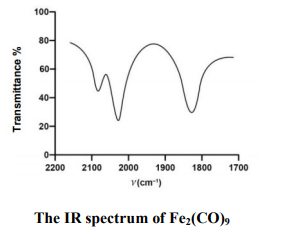
7 What information is obtained from the IR spectrum of Fe2(CO)9?
8 Give a short account of the essential and non essential elements occurring in biological systems.
9 Give the different ways by which lead affects the human body.
10 Explain the conversion of heme to hemin along with a suitable diagram.
PART B: POLYNUCLEAR HYDROCARBONS AND UV, IR SPECTROSCOPY
11 How will you prepare pentan-2-one from ethyl 3-oxobutanoate. Give the reactions involved.
12 (a) Give IUPAC name the following compounds.
(b) Is anthracene aromatic compound? Explain.
13 (a) Among pyridine and pyrrole which one is more basic? Explain
14 In pyridine substitution occur which at the 3 position. Explain.
15 Which are the two main parameters on which the absorption bands in ultraviolet and visible spectra are measured?
16 Explain Woodward rules for predicting -* absorption in dienes.
17 Explain with the help of a diagram the orbital energy relationship between isolated and conjugated C=C and C=O groups.
18 For polyatomic molecule, what are the different types of normal modes of vibration? Give the normal modes of vibrations for the symmetric stretching of a triatomic linear and triatomic angular molecule with suitable diagrams.
19 Give the characteristic frequencies of the ketones and aldehydes. How are they different from esters?
20 (a) List the factors affecting the position and intensity of IR bonds in the IR spectrum.
(b) Explain the bands appearing in the IR spectrum of an alkane giving a suitable example.



 Help?
Help?