

 Help?
Help?
PLEASE MATCH YOUR ASSIGNMENT QUESTIONS ACCORDING TO YOUR SESSION
IGNOU CFN-03 (January 2026 – July 2026) Assignment Questions
Part A: Descriptive Type Question
1. a. What is a food budget? What points would you keep in mind while planning a food budget for your home?
b. Hari is a labourer and gets daily wages. Briefly comment on his expenditure on food commodities.
2. a. Classify foods into three main groups based on the most important requirement to produce them.
b. “Kitchen Garden is an important resource in food production.” Comment on the statement highlighting the importance and the types of crops you would advocate for kitchen garden.
3. a. Explain the working of public distribution system in our country, highlighting the commodities recognized for sale and its functioning.
b. What is a food subsidy? Explain the components of food subsidy.
4. a. Briefly discuss the subsidies given to agricultural inputs.
b. What is the National Agriculture Policy? Highlight its aims/objectives.
5. a. Explain briefly the following:
(i) Advantages of rearing poultry
(ii) Types of fisheries
(iii) Government schemes for marine fisheries
(iv) Products of poultry farm
6. a. Explain briefly how Operation Flood has helped farmers in income generation.
b. What are the initiatives taken by the Government for clean milk production?
7. a. What are the feeding programmes implemented in India? Describe the objectives, beneficiaries and components of any one programme.
b. Present the nutritional prophylaxis provided to the beneficiaries under the National Anaemia Control Programme.
8. a. Briefly explain the relevance of grading in the context of food safety.
b. What is the Food Safety and Standards Act, 2006? List any three objectives of Food Safety and Standard Act, 2006.
9. a. What is adulteration? Give any two examples of adulterant present in food.
b. At the home level what simple measures would you adopt to prevent adulteration?
10. a. What do you understand by Consumer Education? List the benefits of educating the consumers.
b. What are the various schemes operational under Consumer Welfare Fund for consumer awareness?
PART B (Practical Exercises)
There are four exercises in this part. You have to attempt all the questions.
1. A hostel student has a limited monthly allowance. Prepare a weekly food budget and record your observations in the table given below:(Unit 1)

2. Visit a Ration Shop in your locality and compare the cost and quality of essential items when a household buys essential foods (rice, wheat, sugar, pulses) from PDS vs. open market (Unit 3). Record your observations in the table given below:

3. Select any one national nutrition programme (such as ICDS, Mid-Day Meal Scheme, PMPOSHAN, PDS). Conduct a brief field observation to record the following, in the format given below (Unit 7):
• Coverage (beneficiaries reached)
• Food items provided
• Nutritional value delivered
• Frequency/regularity of distribution

4. Conduct a market survey. Identify five different packaged food products. Record your observation related to the nutrition label on each packet. Illustrate any one food label (Unit 9).
IGNOU CFN-03 (January 2024 – July 2024) Assignment Questions
Part A: Descriptive Type Question
1. a. Define food budgeting. Discuss the factors you would consider while preparing a food budget for a food service unit.
b. Explain the following briefly :
(a) Importance of kitchen garden in food production.
(b) Livestock form a very important source of production of food.
(c) Foods from water.
2. a) Elaborate on the three distinct ration cards issued under the TPDS.
b) What are the components of food subsidy? What are its benefits to the consumer ?
3. a) Explain the non-product specific agricultural subsidy granted by the Government.
(b) Give the objectives and the components of the National Agriculture Policy.
4. a. What is a poultry enterprise ? List the Government schemes or programmes launched by the Government for poultry development.
b. Differentiate between ‘Capture fisheries’ and ‘Culture fisheries’, highlighting their types and categories.
5. a. What do you understand by a dairy enterprise? Explain briefly how Operation Flood has helped farmers in income generation.
b. Briefly explain the following:
i. Products of a poultry farm
ii. Government programme for cattle development
iii. Role of ATMA
6. “Different types of supplementary feeding programmes have evolved over the years to combat malnutrition.” Comment on the statement highlighting the different programmes and their supplementary feeding components.
7. a) What is the importance of grading food ? On what basis are fruits and vegetables graded ?
b. What are food laws ? List the main objectives of the Food Safety and Standards Act, 2006 ?
8. What is food adulteration ? Describe the hazards posed by adulterants present in food as well as the economic loss to the consumer.
9. a) Discuss the role of the following in educating the consumers :
i. Media
ii. Consumer protection groups
b) What are the rights of consumers which the Consumer Protection Council strives to promote and protect ?
PART B (Practical Exercises)
There are four exercises in this part. You have to attempt all the questions.
1. Visit a fair price shop and another regular retail shop in your locality and record the prices at which the following commodities are sold in these two shops (Remember the quality of commodity selected in these two shops should be the same). Comment on your observation. (Refer to Unit 3)
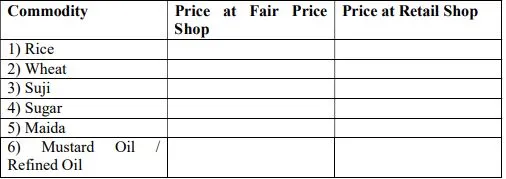
2. a) Visit your nearest Primary Health Centre / Mohalla Clinic and record the ante-natal and post-natal services provided to pregnant and lactating women under the ICDS scheme.
b) Visit any Anganwadi centre (under ICDS) near you and enlist the activities carried out and the beneficiaries availing the facilities.
3. Prepare a plan for a model kitchen garden. Give details of different fruits and vegetables which can be grown in the summer season. (Refer to Unit 2)
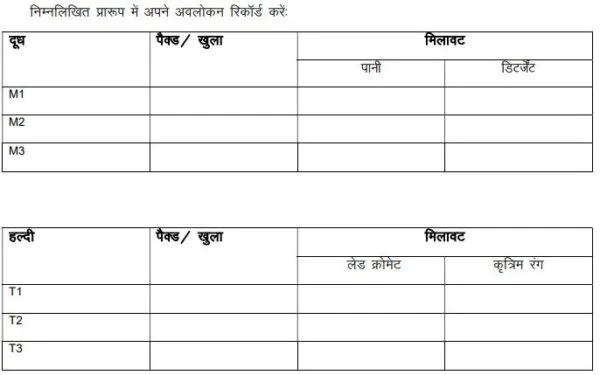
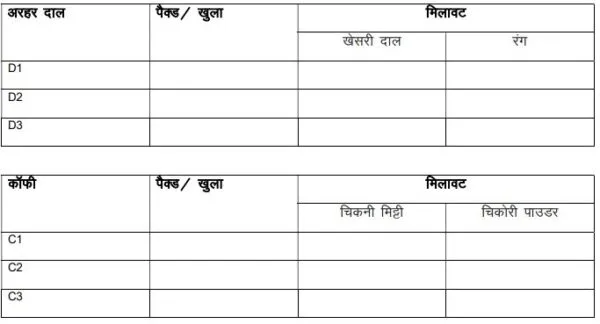
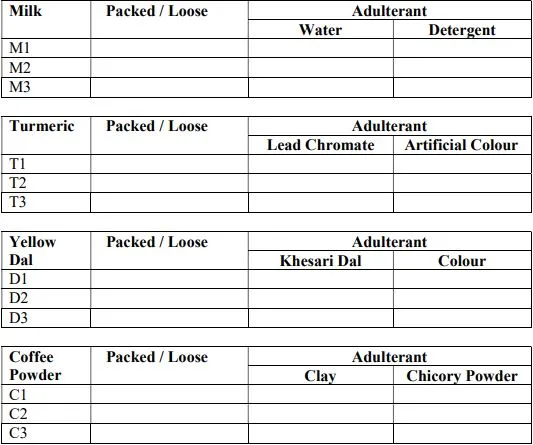
4. Collect three different samples ( packed and loose both ) of milk, turmeric, yellow dal and coffee powder and carry out simple tests to detect adulteration at home (Refer to DART Book (fssai.gov.in).
Record your observations in the following format:
IGNOU CFN-03 (January 2026 – July 2026) Assignment Questions
भाग क वर्णनात्मक प्रश्न
सभी प्रश्न अनिवार्य हैं
1. क) खाद्य बजट क्या है? अपने घर के लिए खाद्य बजट बनाते समय आप किन बिंदुओं को ध्यान में रखेंगे?
ख) हरि एक मजदूर है और उसे दैनिक मजदूरी मिलती है। खाद्य पदार्थों पर उसके व्यय पर संक्षेप में टिप्पणी कीजिए।
2. क) खाद्य पदार्थों को उत्पादित करने के सबसे महत्वपूर्ण आवश्यकता के आधार पर तीन मुख्य समूहों में वर्गीकृत कीजिए।
ख) घरेलू बागवानी खाद्य उत्पादन का एक महत्वपूर्ण संसाधन है।” इस कथन पर टिप्पणी कीजिए तथा घरेलू बागवानी के महत्व और उसमें उगाई जाने वाले पौधे पर प्रकाश डालिए।
3. क) हमारे देश में सार्वजनिक वितरण प्रणाली (PDS) के कार्यप्रणाली को स्पष्ट कीजिए। इसमें बिक्री के लिए मान्यता प्राप्त खाद्य पदार्थों तथा इसके संचालन पर प्रकाश डालिए।
ख) खाद्य सब्सिडी क्या है? खाद्य सब्सिडी के घटकों की व्याख्या कीजिए।
4. क) कृषि आदानों (inputs) पर दी जाने वाली आर्थिक सहायता का संक्षेप में वर्णन कीजिए।
ख) राष्ट्रीय कृषि नीति क्या है? इसके उद्देश्यों को स्पष्ट कीजिए।
5. निम्नलिखित की संक्षेप में व्याख्या कीजिए:
(I) मुर्गी पालन के लाभ
(II) मत्स्य पालन के प्रकार
(iii) समुद्री मत्स्य पालन के लिए सरकारी योजनाएँ
(iv) पोल्ट्री फार्म के उत्पाद
6. क) ऑपरेशन फ्लड ने किसानों की आय बढ़ाने में किस प्रकार सहायता की है, संक्षेप में बताइए।
ख) स्वच्छ दुग्ध उत्पादन के लिए सरकार द्वारा उठाए गए कदमों की व्याख्या कीजिए।
7. क) भारत में कौन-कौन से पोषण कार्यक्रम लागू किए गए हैं? किसी एक कार्यक्रम के उद्देश्यों, लाभार्थियों तथा घटकों का वर्णन कीजिए।
ख) राष्ट्रीय एनीमिया नियंत्रण कार्यक्रम के अंतर्गत लाभार्थियों को प्रदान की जाने वाली पोषक तत्वों की खुराक प्रस्तुत करें।
8. क) खाद्य सुरक्षा के संदर्भ में ग्रेडिंग (grading) के महत्व को संक्षेप में स्पष्ट कीजिए।
ख) खाद्य सुरक्षा एवं मानक अधिनियम, 2006 क्या है? इस अधिनियम के कोई तीन उद्देश्य लिखिए ।
9. क) मिलावट (adulteration) क्या है? भोजन में पाए जाने वाले किसी भी दो मिलावट कारकों के उदाहरण दीजिए।
ख) घरेलू स्तर पर मिलावट को रोकने के लिए आप कौन-से सरल उपाय अपनाएँगे ?
10. क उपभोक्ता शिक्षा से आप क्या समझते हैं? उपभोक्ताओं को शिक्षित करने के लाभ लिखिए।
ख उपभोक्ता जागरूकता के लिए उपभोक्ता कल्याण कोष के अंतर्गत संचालित विभिन्न योजनाएँ कौन-सी?
भाग ख: प्रयोगात्मक अभ्यास
इस भाग में चार अभ्यास है। सभी प्रश्नों का उत्तर दीजिये :
1. एक छात्रावास (होस्टल) में रहने वाले छात्र/छात्रा के पास सीमित मासिक भत्ता है। एक साप्ताहिक खाद्य बजट तैयार करें और अपने उत्तर नीचे दी गई तालिका में भरे (खाद्य बजट तैयार करने के मार्गदर्शन के लिए इकाई-1 देखें) ।

2. अपने क्षेत्र की किसी राशन की दुकान का भ्रमण करें और यह तुलना करें कि जब कोई परिवार आवश्यक खाद्य पदार्थ (चावल, गेहूँ, चीनी, दालें) पीडीएस (सार्वजनिक वितरण प्रणाली) से खरीदता है तथा खुले बाजार से खरीदता है, तो उनकी लागत और गुणवत्ता में क्या अंतर होता है। अपने उत्तर नीचे दी गई तालिका में भरे

3. किसी एक राष्ट्रीय पोषण कार्यक्रम का चयन करें (जैसे- आईसीडीएस, मिड-डे मील योजना, पीएम-पोषण, पीडीएस)। संक्षिप्त क्षेत्रीय अवलोकन करके निम्नलिखित बिंदुओं को नीचे दिए गए प्रारूप में दर्ज करें: (इकाई 7)
लाभार्थियों की संख्या
प्रदान किए गए खाद्य पदार्थ
उपलब्ध कराया गया पोषण मूल्य
वितरण की आवृत्ति/नियमितता

4. एक बाजार का सर्वेक्षण करें। पाँच विभिन्न पैकेज्ड खाद्य उत्पादों की पहचान करें। प्रत्येक पैकेट पर दिए गए पोषण लेबल से संबंधित अपने अवलोकन को दर्ज करें। किसी एक खाद्य लेबल का चित्रण भी करें: (इकाई 9)
IGNOU CFN-03 (January 2024 – July 2024) Assignment Questions
भाग कः वर्णनात्मक प्रश्न
1. क) खाद्य बजट को परिभाषित करें। खाद्य सेवा इकाई के लिए खाद्य बजट तैयार करते समय आप जिन कारकों पर विचार करेंगे, उन पर चर्चा करें।
ख) निम्नलिखित को संक्षेप में स्पष्ट कीजिए:
(i) खाद्य उत्पादन में किचन गार्डन का महत्व |
(ii) पशुधन भोजन के उत्पादन का एक बहुत ही महत्वपूर्ण स्त्रोत है।
(iii) पानी से खाद्य पदार्थ ।
2. क) लक्षित सार्वजनिक वितरण प्रणाली के अधीन जारी किए गए तीन अलग-अलग राशन कार्डों के बारे में विस्तार से बताइए ।
(ख) खाद्य पदार्थों के लिए दी गई आर्थिक सहायता के घटक क्या हैं? उपभोक्ता के लिए इसके क्या लाभ हैं?
3. क) सरकार द्वारा दी गई गैर- उत्पाद विशिष्ट कृषि सब्सिडी की व्याख्या कीजिए ।
(ख) राष्ट्रीय कृषि नीति के उद्देश्यों और घटकों के बारे में बताइए ।
4. क) पोल्ट्री उद्यम क्या है? मुर्गी पालन विकास के लिए सरकार द्वारा शुरू किये गये कार्यक्रमों को सूचीबद्ध कीजिए ।
ख) ‘कैप्चर मत्स्य पालन’ और ‘कल्चर मत्स्य पालन के बीच अंतर बताते हुए, उनके प्रकार और श्रेणियों को उजागर करें।
5. क) एक डेयरी उद्यम से आप क्या समझते हैं? संक्षेप में समझाइए कि ऑपरेशन फ्लड ने किस प्रकार किसानों को आय सृजन में सहायता की है।
ख) निम्नलिखित को संक्षेप में समझाइए
i) पोल्ट्री फार्म के उत्पाद
ii) मवेशी विकास के लिए सरकारी कार्यक्रम
iii) कृषि प्रौद्योगिकी प्रबंधन एजेसी
6. कुपोषण से निपटने के लिए पिछले कुछ वर्षों में विभिन्न प्रकार के पूरक आहार कार्यक्रम विकसित हुए हैं। विभिन्न कार्यक्रमों और उनके पूरक आहार घटकों पर प्रकाश डालते हुए इस वक्तव्य पर टिप्पणी करें। (6)
7. क) भोजन की ग्रेडिंग का क्या महत्व है? फलों और सब्जियों को किस आधार पर श्रेणीकरण किया जाता है?
ख) खाद्य कानून क्या हैं? खाद्य सुरक्षा और मानक अधिनियम, 2006 के मुख्य उद्देश्यों की सूची बनाइए?
8. खाद्य मिलावट क्या है? भोजन में मौजूद मिलावटी तत्वों से होने वाले खतरों तथा उपभोक्ता को होने वाले आर्थिक नुकसान का वर्णन कीजिए ।
9. क) उपभोक्ताओं को शिक्षित करने में निम्नलिखित की भूमिका पर चर्चा कीजिए:
i. मीडिया
ii. उपभोक्ता संरक्षण समूह
ख) उपभोक्ताओं के वे कौन से अधिकार हैं जिन्हें उपभोक्ता संरक्षण परिषद बढ़ावा देने और उनकी रक्षा करने का प्रयास करती है?
भाग ख (प्रयोगात्मक अभ्यास)
1. अपने इलाके में एक उचित मूल्य की दुकान और एक अन्य नियमित खुदरा दुकान पर जाएं और निम्नलिखित वस्तुएं के दाम की रिकॉर्ड करें (याद रखें कि इन दोनों दुकानों में चयनित वस्तु की गुणवत्ता समान होनी चाहिए)। अपने अवलोकन पर टिप्पणी करें. (इकाई 3 देखें)
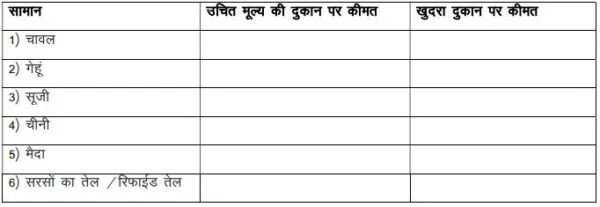
2. क) अपने निकट एक प्राथमिक चिकित्सा केन्द्र या मोहल्ला क्लिनिक पर जाएं और आईसीडीएस योजना के तहत गर्भवती और स्तनपान कराने वाली महिलाओं को प्रदान की जाने वाली प्रसव पूर्व और प्रसवोत्तर सेवाओं को रिकॉर्ड करें।
ख) अपने आस-पास के किसी भी आंगनवाड़ी केंद्र (आईसीडीएस के तहत ) पर जाएं और वहाँ होने वाली गतिविधियों और सुविधाओं का लाभ उठाने वाले लाभार्थियों को सूचीबद्ध करें।
3. एक मॉडल किचन गार्डन के लिए एक योजना तैयार करें। विभिन्न फलों और सब्जियों का विवरण दें जिन्हें गर्मी के मौसम में उगाया जा सकता है। (इकाई 2 देखें)
4. दूध, हल्दी, पीली दाल और कॉफी पाउडर के तीन अलग-अलग नमूने (पैक और खुले दोनों) एकत्र करें और घर पर मिलावट का पता लगाने के लिए सरल परीक्षण करें। ( DART किताब से सहायता लें) FSSAI | https://fssai.gov.in/book-details.php?bkid=201