IGNOU MMPC-11 (January 2026 – July 2026) Assignment Questions
1. Explain the society–environment–organisation interface and discuss how key social processes (such as socialisation, cooperation, competition and conflict) act as sources of human behaviour in organisations. Illustrate your answer with suitable workplace examples.
2. What are the major determinants of personality and how do they interact with values and attitudes to influence behaviour at work? Discuss how perception and attribution processes can lead to errors in managerial judgement, and suggest ways to minimise such errors.
3. Differentiate between content and process theories of motivation, citing at least one example of each. How can concepts of learning and behavioural modification be used by managers to enhance employee motivation and performance in organisations?
4. Define group dynamics and explain the stages of group development. Discuss the sources of conflict in groups and describe how effective communication, team-building practices and negotiation strategies can be used to manage conflict constructively.
5. Discuss the relationship between leadership style, organisational culture and employee behaviour. How can understanding social and behavioural processes help managers lead organisational change and foster a positive organisational climate?
IGNOU MMPC-11 (January 2025 – July 2025) Assignment Questions
Assignment Brief:
Case Study Analysis and Application of OB Theories in Reliance Industries
Read the following case study carefully.
Reliance Industries: Navigating Organizational Dynamics in a Conglomerate
Reliance Industries Limited (RIL) is one of India’s largest conglomerates with diversified businesses including petrochemicals, refining, oil, telecommunications (Jio), and retail. Under the leadership of Mukesh Ambani, RIL has seen exponential growth and has become a global player. However, the company faces various organizational behavior challenges such as managing a large and diverse workforce, fostering innovation, maintaining employee engagement, and handling the complexities of rapid growth and diversification. The HR and leadership teams at RIL are continuously working to address these challenges by implementing various OB strategies and practices.
Questions:
a. Organizational Culture:
i. Describe the organizational culture at Reliance Industries. How does this culture support or hinder the company’s objectives?
ii. Provide examples of cultural practices at RIL that illustrate its values, norms, and beliefs.
iii. Analyze the impact of organizational culture on employee behavior and company performance.
b. Leadership and Management:
i. Examine the leadership style of Mukesh Ambani and other top leaders at RIL. How do their leadership styles influence the company’s culture and employee behavior?
ii. Discuss the role of transformational and transactional leadership at RIL. Provide examples of how these leadership styles are manifested in the company’s management practices.
c. Motivation and Employee Engagement:
i. Identify the key factors that contribute to employee motivation and engagement at Reliance Industries. How does the company address these factors?
ii. Apply two motivation theories (e.g., Maslow’s Hierarchy of Needs, Herzberg’s Two-Factor Theory, McClelland’s Theory of Needs) to analyze how RIL motivates its employees. Provide specific examples from the company.
d. Communication and Team Dynamics:
i. Analyze the communication channels and practices at Reliance Industries. How effective are they in ensuring efficient information flow and collaboration?
ii. Discuss the dynamics of team collaboration within RIL. How does the company manage conflicts and promote teamwork? Provide examples of successful team projects and initiatives.
2. Application of OB Theories:
i. Select two organizational behavior theories and explain how they can be applied to address the OB challenges at Reliance Industries.
ii. Discuss how these theories can help in developing effective organizational strategies and practices for the company.
3. Conclusion:
i. Summarize the key findings from your analysis.
ii. Provide actionable recommendations for Reliance Industries to enhance its organizational behavior practices and support its growth.
Format:
• Your analysis should be 3,000 to 4,000 words in length.
• Use headings and subheadings to organize your content.
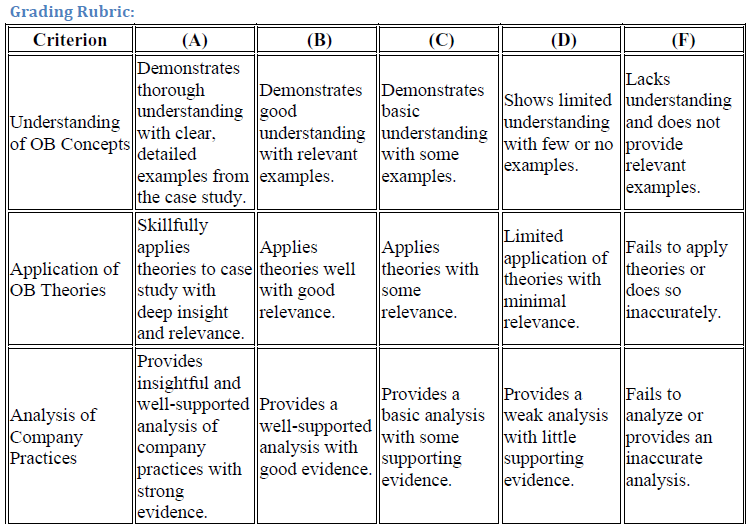
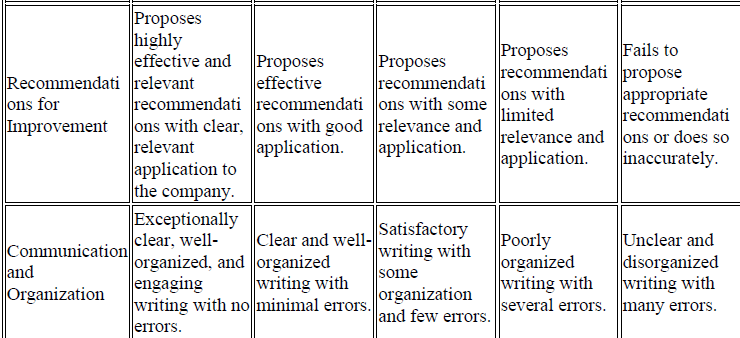
Evaluation Criteria:
• Demonstration of understanding of OB concepts and practices.
• Application of theories to the company’s context.
• Quality and depth of analysis.
• Clarity of communication and organization of content.
Note: You are encouraged to use additional resources and real-world examples to support your analysis. Critical thinking and originality will be highly valued in your responses.



 Help?
Help?